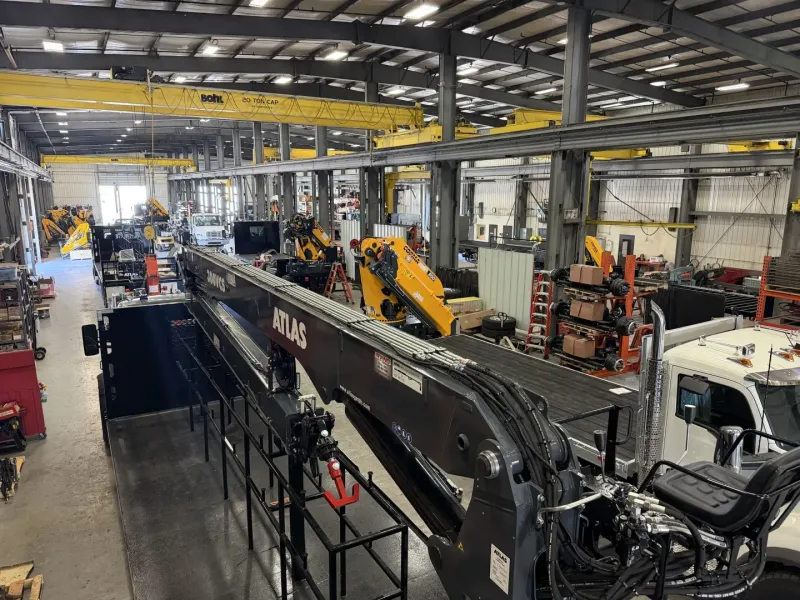
Crane Parts & Service
Need a Part?
Contact the Parts Department
-
Call
-
Text
Crane Service & Repair
Service Capabilities
Crane inspections & certifications
Boom-section & structural repairs
Crane mounting & remounting
Crane refurbishment
Accident repairs
Insurance claim repairs
Fabrication
Painting
Service for Most Major Crane Brands
Frequently Asked Questions
Yes. You do not have to purchase your crane from Irving to have it serviced there. Irving technicians work on most major crane brands.
Yes. Irving’s service capabilities include boom-section and structural repairs, crane mounting and remounting, refurbishment, accident and insurance claim repairs, fabrication, painting, inspections, and other crane service work.
Yes. Irving maintains more than 9,000 crane and loader parts at its Tiffin, Ohio, parts distribution center and provides parts support throughout North America.
If possible, provide the crane or equipment serial number, part number, and a photo of the part. If you don’t know the part number, Irving’s Parts Department can help identify what you need.
Yes, your crane should be inspected at least yearly but Irving Equipment can help you determine what you need for your unit.
Irving services and inspects equipment beyond cranes it originally sold. Contact Irving with the crane make, model, serial number, and the type of inspection needed to confirm inspection for your equipment.
Have the crane make, model, and serial number available, along with information about the equipment and the inspection being requested. Irving can then determine what additional information or preparation is needed.
Greasing intervals depend on the crane, its workload, and operating conditions. As a general Irving guideline, the rotation system may require greasing every one to two weeks or approximately every 50 operating hours, while pins, bushings, and boom grease points may require service every two to four weeks or approximately every 100 hours. Follow the maintenance schedule for your specific crane.
Routine maintenance can include greasing, checking and changing filters and hydraulic oil, and visually inspecting accessible pins, bushings, pin keepers, hoses, fittings, grease points, and other visible components for unusual wear, damage, looseness, or leaks. Maintenance needs and intervals vary by crane and operating conditions, so follow the requirements for your specific equipment.
The correct hydraulic oil depends on the crane manufacturer and model, as well as operating conditions and temperature range. Check the manufacturer’s requirements or provide Irving with the crane make, model, and serial number so the team can help identify the appropriate oil.